




-
Gold recovery averaging 94.3% from Rhosgobel deposit utilizing conventional whole ore cyanidation leaching at a grind size of 75 microns;
-
Results from initial metallurgical testing returned a tungsten recovery of 84.7% in rougher concentrate using conventional flotation with a very low mass pull of less than 1%;
-
Initial metallurgy confirms high recoveries for both tungsten and gold and demonstrates that tungsten could be a valuable by-product of potential future production at Rhosgobel
-
Multiple occurrences of visible gold and tungsten mineralization have been observed in the initial 2026 drill core at Rhosgobel
-
60,000 m diamond drill program underway; 30,000 m of drilling planned at Rhosgobel in 2026
-
Four diamond drill rigs are currently active on the property; two additional rigs anticipated to mobilize in the coming weeks
Vancouver, British Columbia–(Newsfile Corp. – May 4, 2026) – Sitka Gold Corp. (TSXV: SIG) (FSE: 1RF) (OTCQX: SITKF) (“Sitka” or “Sitka Gold” or the “Company”) is pleased to announce positive results from initial metallurgical testwork completed for gold and tungsten recoveries at the newly discovered Rhosgobel Gold Deposit (inferred mineral resource estimate of 2.25 million ounces of gold with 100.68 Mt @ 0.70 g/t Au; see news release dated February 25, 2026) at its flagship RC Gold Project in Yukon.
The results of the initial testwork demonstrate robust gold recoveries ranging from 91.8% – 97.3% with an overall average of 94.3% (see Table 3) at Rhosgobel utilizing whole ore bottle roll testing which represents Carbon in Leach (“CIL”)/Carbon in Pulp (“CIP”) processes, the most commonly used milling gold recovery method.
A high tungsten recovery that averaged 84.7% was achieved with standard grinding and rougher flotation testwork with a very low mass pull of less than 1%. Flotation is a standard method for recovering tungsten from scheelite-bearing deposits and these results demonstrate the potential for tungsten to be a high value by-product of the Rhosgobel gold deposit, where recent assay results have confirmed the presence of significant tungsten mineralization across a broad 850 metre strike length.
“Initial metallurgical testing of gold and tungsten recoveries at Rhosgobel has returned some excellent results with an average recovery of 94.3% for gold and an initial recovery of 84.7% for tungsten,” said Cor Coe, Director and CEO of Sitka Gold. “These results demonstrate that the gold mineralization at Rhosgobel is not refractory and that a very high gold recovery is achievable with minimal NaCN consumption. Additionally, over 85% of the gold was recovered within the first six hours of leaching, confirming rapid leach kinetics. The high recovery rate for tungsten mineralization discovered within the Rhosgobel deposit further supports the potential for this critical mineral to be a valuable by-product of potential future production. These factors are all significant as they enhance the economic viability of mineral extraction from the Rhosgobel deposit.
“Furthermore, multiple occurrences of visible gold and tungsten mineralization have been observed in the initial 2026 drill core at Rhosgobel as we continue to expand drilling beyond the known mineralized envelope. With 30,000 metres of drilling planned at Rhosgobel this year, which will triple the total amount of drilling completed there to date, we look forward to rapidly expanding this unique gold and tungsten deposit that begins at surface and remains wide open in all directions.”
Rhosgobel Initial Metallurgical Results
Gold Recovery
Sitka selected mineralized intervals of representative drill core from 2025 drilling at the Rhosgobel deposit to complete initial gold and tungsten recovery testwork. The individual samples were shipped to Blue Coast Research Ltd. in Parksville, British Columbia for sample preparation and metallurgical testing. The sample intervals were composited into 6 separate test composites as shown in Table 1 and were used for the preliminary gold recovery metallurgical testing.
Conventional bottle roll cyanidation tests were completed on 6 composite samples at a target grind size of 75 um and a leaching duration of 48 hours. The whole ore leach results ranged from 91.8% – 97.3% gold recovery with an overall average of 94.3%. On average, over 85% of the gold was recovered in the composite samples within the first 6 hours of leaching, demonstrating rapid leach kinetics (see Figure 1). The bottle roll test results are indicative of gold recovery in a conventional mill process including Carbon in Leach (“CIL“) and/or Carbon in Pulp (“CIP“). The bottle roll test parameters are summarized in Table 2. Summary results for the gold recovery testwork are shown in Table 3.
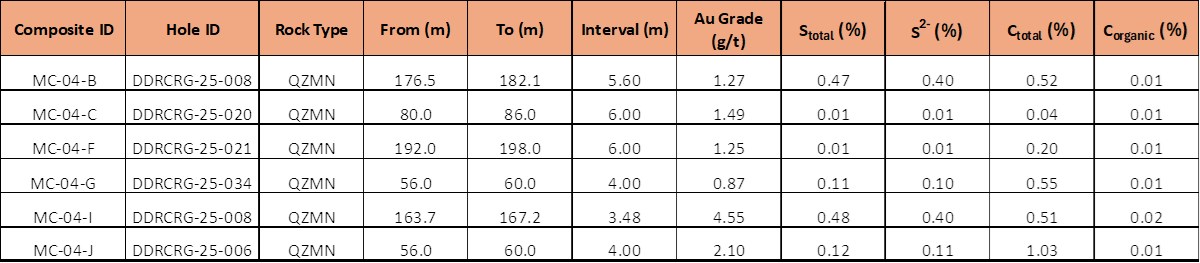
Table 1. Rhosgobel composite sample head assays for gold recovery testwork.
To view an enhanced version of this graphic, please visit:
https://images.newsfilecorp.com/files/6144/295731_f30ebc8294bbf93c_001full.jpg
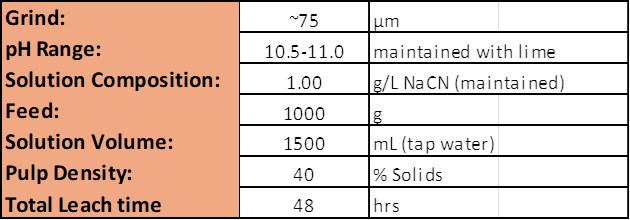
Table 2. Bottle Roll Test Parameters.
To view an enhanced version of this graphic, please visit:
https://images.newsfilecorp.com/files/6144/295731_f30ebc8294bbf93c_002full.jpg
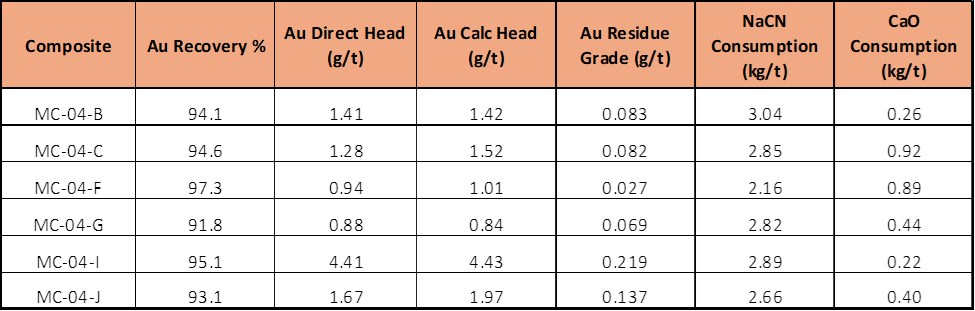
Table 3. Summary results for gold recovery testwork at the Rhosgobel deposit.
To view an enhanced version of this graphic, please visit:
https://images.newsfilecorp.com/files/6144/295731_f30ebc8294bbf93c_003full.jpg
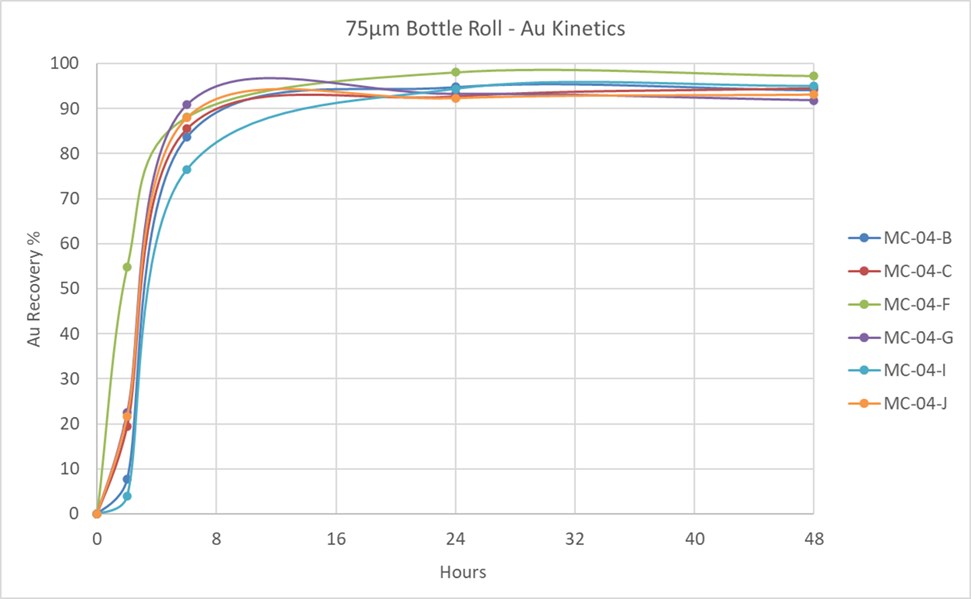
Figure 1: Kinetic Gold leach results
To view an enhanced version of this graphic, please visit:
https://images.newsfilecorp.com/files/6144/295731_f30ebc8294bbf93c_004full.jpg
Tungsten Recovery
Preliminary conventional flotation was tested to assess the potential for tungsten recovery in Rhosgobel samples. 3 separate core sample intervals from Rhosgobel drill holes from the 2025 drilling program were combined into a single master composite to complete the initial testwork. The composite samples used to prepare the master composite for tungsten testwork are shown in Table 4.

Table 4. Composite samples for tungsten recovery testwork
To view an enhanced version of this graphic, please visit:
https://images.newsfilecorp.com/files/6144/295731_f30ebc8294bbf93c_005full.jpg
The tungsten flotation testwork was completed at a coarse grind size of 191 um using 2 kg. of master composite sample at 60% solids. A sulphide pre-float (Sulphide Rougher 1 Con) was used to first remove floatable sulphides which was successful while only removing a minimal amount of tungsten prior to the first rougher flotation. Appreciable gold recovery in the pre-sulfide floatation resulted in a Au grade of 533.8 gpt.
3 stages of rougher flotation were completed in series (W Rougher 1 Con, W Rougher 2 Con and W Rougher 3 Con; see Table 5) which resulted in a total tungsten recovery of 84.7% in the rougher flotation concentrates with a very low mass pull of less than 1%. Mass pull is the percentage of the original rock that ends up in the final concentrate after processing, a low mass pull is important as it results in a low volume of material that will require further processing.
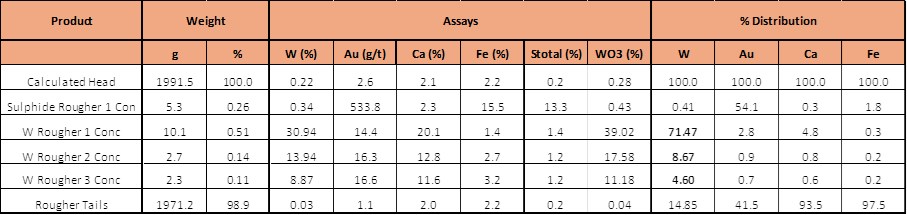
Table 5. Summary results for tungsten recovery testwork at the Rhosgobel deposit.
To view an enhanced version of this graphic, please visit:
https://images.newsfilecorp.com/files/6144/295731_f30ebc8294bbf93c_006full.jpg
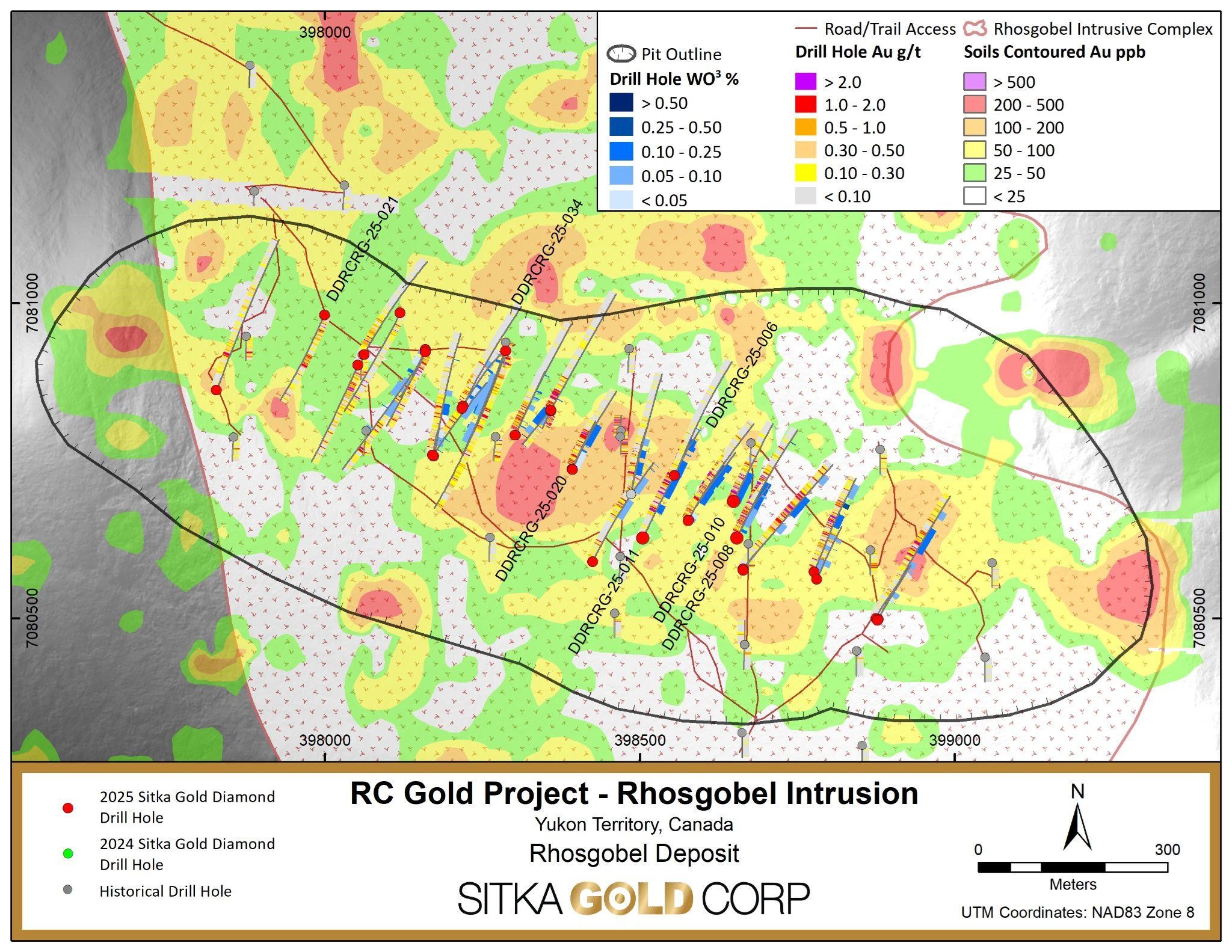
Figure 2: Plan map of the Rhosgobel Intrusion showing gold assays and tungsten composites from the 2024 – 2025 diamond drilling. Composites from the labelled drill holes were used for initial metallurgical testing reported in this news release (see Tables 1 and 4 for details). Drilling to date has been focused on the core of the target area which is supported by a large 1.5 km x 2.0 km gold-in-soil anomaly. Up to 30,000 metres of additional drilling is planned at Rhosgobel this year.
To view an enhanced version of this graphic, please visit:
https://images.newsfilecorp.com/files/6144/295731_f30ebc8294bbf93c_007full.jpg
Tungsten Mineralization at Rhosgobel
Tungsten mineralization has been observed in all of the drill holes completed to date across the 3×2 km Rhosgobel Intrusion and occurs as coarse (up to 5 cm) scheelite crystals within the sub-metre scale quartz, and quartz tourmaline veins and as smaller (0.5-1 cm) crystals within the centimetre-scale sheeted quartz veins cutting the quartz monzonite intrusion at Rhosgobel. Analytical results and the initial metallurgical recoveries of up to 84.7% utilizing floatation demonstrate that Tungsten could be an economic by-product of potential future production at Rhosgobel.
An example of a large, intrusion-related tungsten deposit that is amenable to open-pit mining is Northcliff Resources Sisson Deposit located in New Brunswick – a pre-construction stage tungsten-molybdenum deposit that hosts 387 Mt of tungsten grading 0.067% WO3 in the Measured and Indicated category and 187 Mt of tungsten grading 0.050% WO3 in the Inferred category1. This project was recently added to Canada’s Nation Building Projects List2 and has received funding from both the U.S. Government through the U.S. Defense Production Act3 and the Government of Canada through Natural Resources Canada (NRCan)4.
- https://www.northcliffresources.com/sissonprojecttechnical
- https://www.northcliffresources.com/post/northcliff-announces-sisson-project-on-canada-s-nation-building-projects-list
- https://www.northcliffresources.com/post/northcliff-announces-funding-to-accelerate-development-of-the-sisson-critical-minerals-project
- https://www.northcliffresources.com/post/northcliff-announces-government-of-canada-funding-for-the-sisson-project
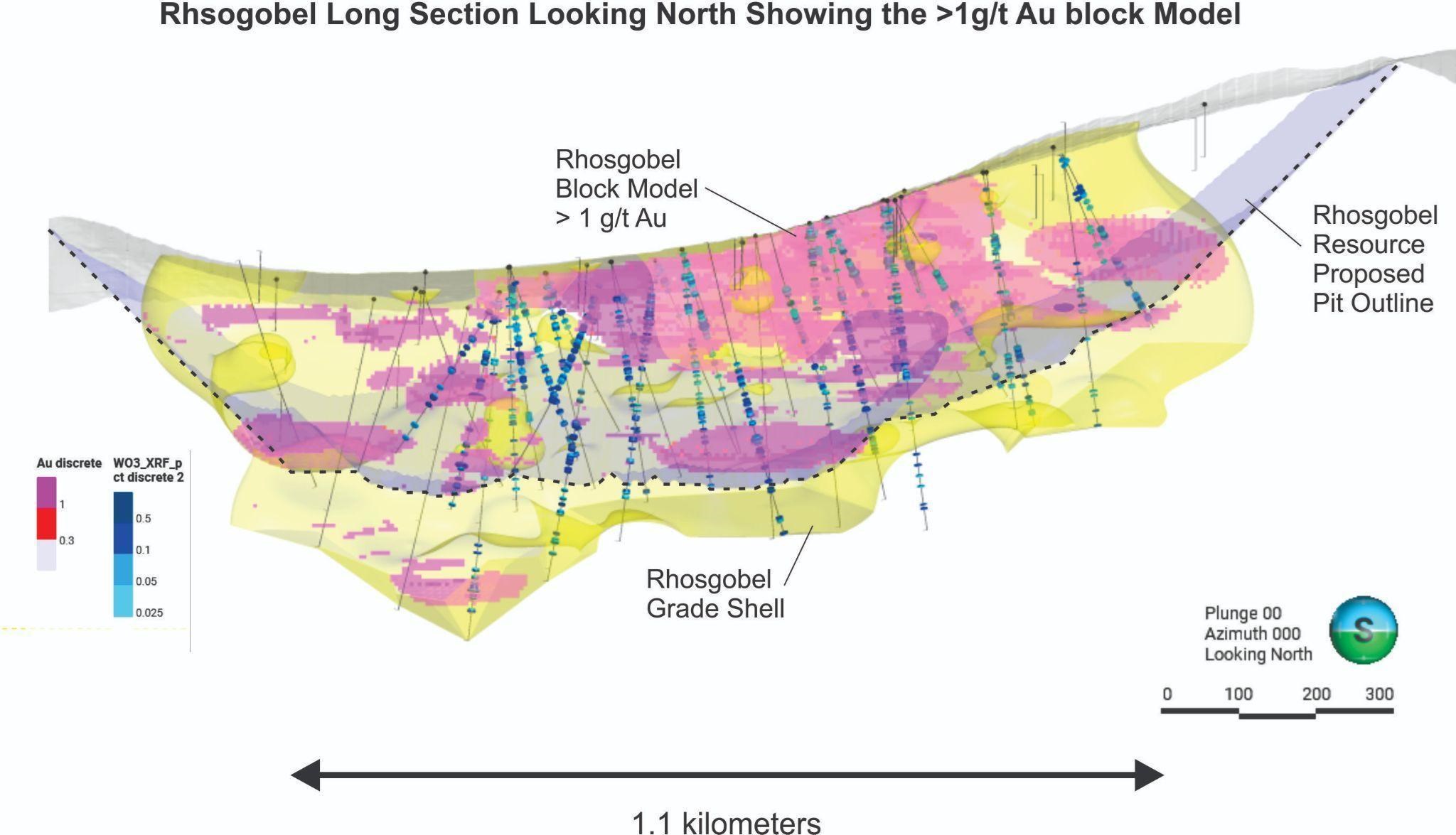
Figure 3: Long Section through the Rhosgobel Deposit showing the grade shell, block model with gold grades > 1 g/t, and the tungsten assays in the 2025 drilling within current proposed pit limits. Up to 30,000 metres of drilling is planned at Rhosgobel this year.
To view an enhanced version of this graphic, please visit:
https://images.newsfilecorp.com/files/6144/295731_f30ebc8294bbf93c_008full.jpg
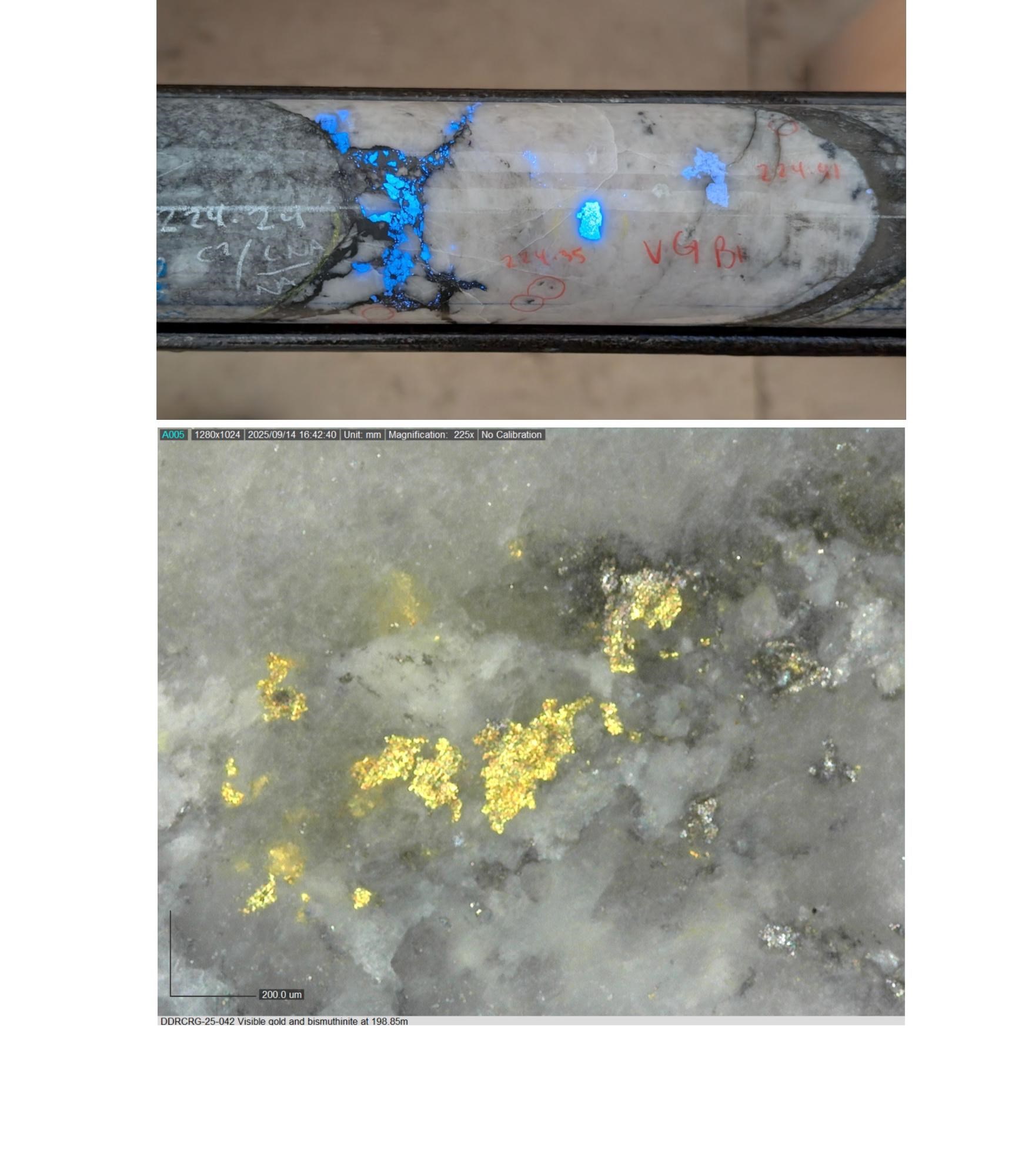
Figure 4: Example of scheelite (top picture), a common tungsten mineral, illuminated by ultra-violet light with visible gold and bismuthinite (red circles) in a quartz vein in drill core from the Rhosgobel intrusion along with an additional example of visible gold (bottom picture), both observed in DDRCRG-25-042.
To view an enhanced version of this graphic, please visit:
https://images.newsfilecorp.com/files/6144/295731_f30ebc8294bbf93c_009full.jpg
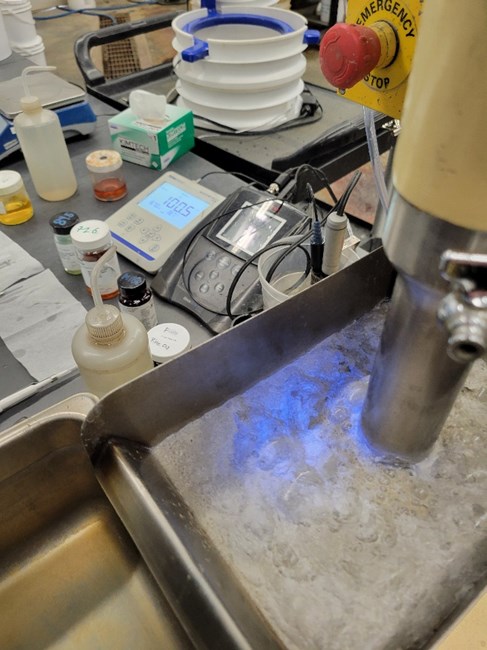
Figure 5: A photo showing the floatation testing with scheelite illuminated by ultra-violet light. Initial floatation testing returned an 84.7% recovery for tungsten from the Rhosgobel deposit.
To view an enhanced version of this graphic, please visit:
https://images.newsfilecorp.com/files/6144/295731_f30ebc8294bbf93c_010full.jpg
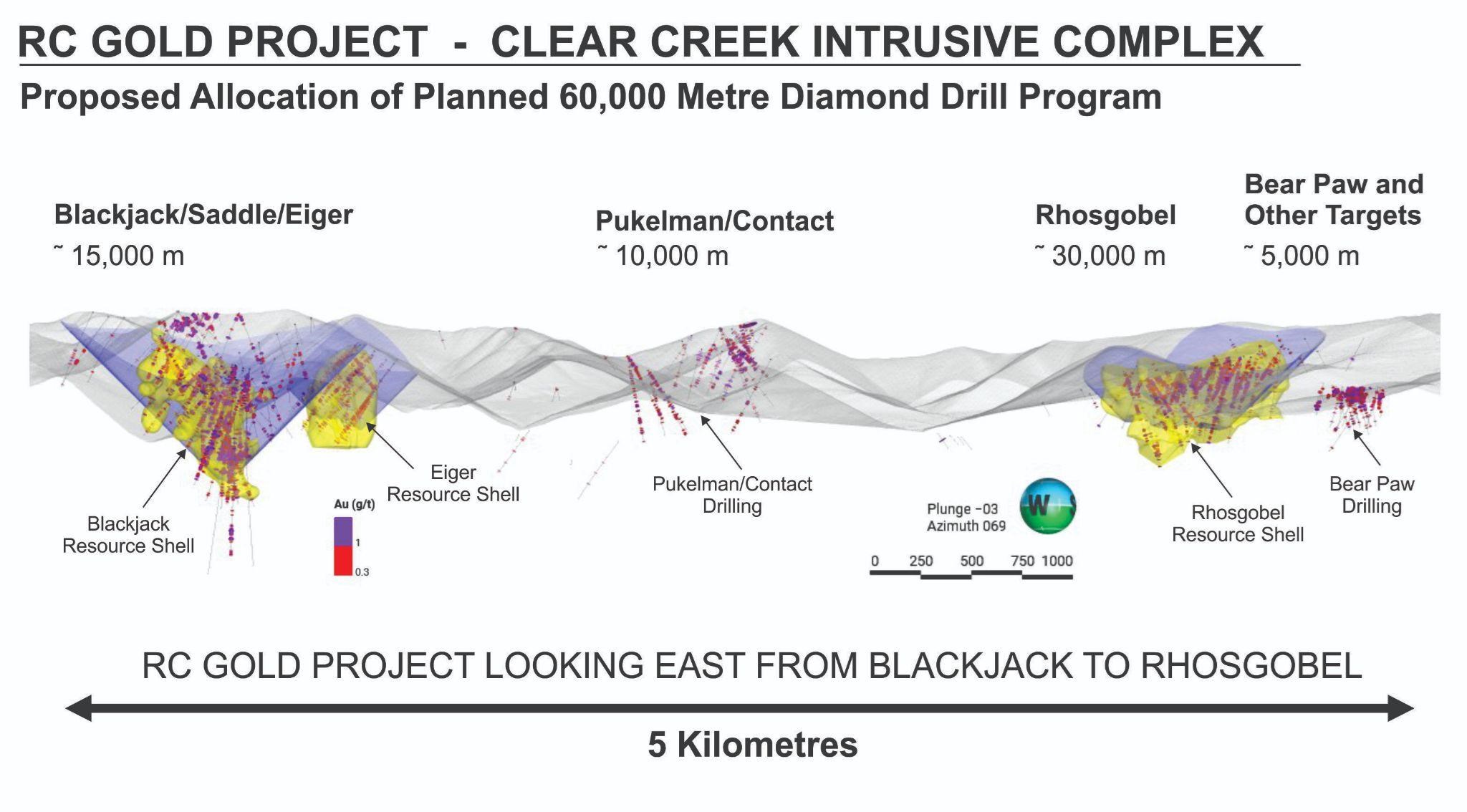
Figure 6: Long Section of the Clear Creek Intrusive Complex (CCIC).
To view an enhanced version of this graphic, please visit:
https://images.newsfilecorp.com/files/6144/295731_f30ebc8294bbf93c_011full.jpg
About the RC Gold Project
Sitka’s 100% owned, flagship RC Gold Project consists of a 447 square kilometre contiguous district-scale land package located in the heart of Yukon’s Tombstone Gold Belt. The project is located approximately 100 kilometres east of Dawson City, which has a 5,000 foot paved runway, and is accessed via a secondary gravel road from the Klondike Highway which is usable year-round and is an approximate 2 hour drive from Dawson City. It is one of the largest consolidated land packages strategically positioned mid-way between the Eagle Gold Mine and the past producing Brewery Creek Gold Mine.
The RC Project hosts an indicated MRE of 1,291,000 ounces of gold and an inferred MRE of 3,829,000 ounces of gold (see Table 3 below) hosted within three at surface, road accessible pit constrained deposits. The 2026, 60,000m drill program is focused on expanding all three known deposits in addition to testing other high potential targets in close proximity to the current resources.
Table 6: Summary of RC Gold Project Mineral Resources
| Zone | Class | Cut-off Grade (g/t Au) | Tonnes (000’s) | Gold Grade (Au g/t) | Oz Au (000’s) |
| Blackjack * | Indicated | 0.3 | 39,962 | 1.01 | 1,291 |
| Blackjack * | Inferred | 0.3 | 34,603 | 0.94 | 1,044 |
| Rhosgobel** | Inferred | 0.3 | 100,677 | 0.7 | 2,250 |
| Eiger** | Inferred | 0.3 | 32,143 | 0.52 | 535 |
| Total Inferred | Inferred | 0.3 | 167,423 | 0.72 | 3,829 |
* Notes for Blackjack Resources:
-
Mineral resource estimate prepared by Ronald G. Simpson of GeoSim Services Inc. with an effective date of January 21, 2025.
-
Mineral Resources are estimated consistent with CIM Definition Standards and reported in accordance with NI 43-101.
-
Mineral resources are not mineral reserves and do not have demonstrated economic viability.
-
Mineral resources are constrained by an optimized pit shell using the following assumptions: US$2000/oz Au price; a 45° pit slope; assumed metallurgical recovery of 85%; mining costs of US$2.00 per tonne; processing costs of US$10.00 per tonne; G&A of US$4.00/t.
-
The base case cut-off of 0.3 g/t Au is believed to provide a reasonable margin over operating and sustaining costs for open-pit mining and processing.
-
Totals may not sum due to rounding.
** Notes for Rhosgobel and Eiger Resources:
-
Mineral resource estimate prepared by Ronald G. Simpson of GeoSim Services Inc. with an effective date of February 25, 2026.
-
Mineral Resources are estimated consistent with CIM Definition Standards and reported in accordance with NI 43-101.
-
Mineral resources are not mineral reserves and do not have demonstrated economic viability.
-
Mineral resources are constrained by an optimized pit shell using the following assumptions: US$3000/oz Au price; a 45° pit slope; assumed metallurgical recovery of 85%; mining costs of US$2.50 per tonne; processing costs of US$14.00 per tonne; G&A of US$4.00/t.
-
The base case cut-off of 0.3 g/t Au is based on a gold price of US$2500/oz and believed to provide a reasonable margin over operating and sustaining costs for open-pit mining and processing.
-
Totals may not sum due to rounding.
All of these deposits begin at surface and are potentially open pit minable. Initial bottle roll metallurgical testing confirmed the non-refractory characteristics of the gold mineralization and returned gold extraction rates averaging around 85% for the Blackjack and Eiger deposits. Further metallurgical testwork in 2024 for Blackjack and Eiger returned recoveries ranging from 77.6 to 93% for gravity followed by cyanidation. Initial bottle roll testing for Rhosgobel has confirmed non-refractory characteristics of the gold mineralization with two composite samples returning gold recoveries of 89% and 96%.
For the purposes of the current resource model, it is assumed that a likely mill flowsheet would consist of a gravimetric, flotation, and cyanidation circuit.
Upcoming Events
Sitka Gold will be attending and/or presenting at the following events*:
- Canaccord Global Metals and Mining Conference: Henderson, NV: May 19 – 21, 2026
- TAKESTOCK Investor Series Stampede Special, Calgary, AB: June 30, 2026
- Yukon Mining Alliance – Property Tours and Conference, Dawson City, Yukon: July 12-15, 2026
- Diggers and Dealers: Kalgoorlie, Western Australia: August 3 – 5, 2026
*All events are subject to change.
About Sitka Gold Corp.
Sitka Gold Corp. is a well-funded mineral exploration company headquartered in Canada. The Company is managed by a team of experienced industry professionals and is focused on exploring for economically viable mineral deposits with its primary emphasis on gold, silver and copper mineral properties of merit. Sitka is currently advancing its 100% owned, 447 square kilometre flagship RC Gold Project located within the Tombstone Gold Belt in the Yukon Territory. The Company has also announced plans to spin-out the Alpha Gold Project in Nevada and the Burro Creek Gold and Silver Project in Arizona into a new discovery-focused exploration company to be named at a later date.
A 60,000 metre diamond drilling program planned for 2026 is currently underway at the Company’s flagship RC Gold Project, located in Yukon Canada, where 4 diamond drill rigs are currently operating.
*For more detailed information on the Company’s properties please visit our website at www.sitkagoldcorp.com
Quality Assurance/Quality Control
On receipt from the drill site, the HTW/NTW-sized drill core was systematically logged for geological attributes, photographed and sampled at Sitka’s core logging facility. Sample lengths as small as 0.3 m were used to isolate features of interest, otherwise a default 2 m downhole sample length was used. Each sample is identified by a unique sample tag number which is placed in the bag containing the core to be assayed. Core was cut in half lengthwise along a predetermined line, with one-half (same half, consistently) collected for analysis and one-half stored as a record. Standard reference materials, blanks and duplicate samples were inserted by Sitka personnel at regular intervals into the sample stream. Bagged samples were placed in secure bins to ensure integrity during transport. They were delivered by Sitka personnel or a contract expeditor to ALS Laboratories’ preparatory facility in Whitehorse, Yukon, with analyses completed in North Vancouver.
ALS is accredited to ISO 17025:2005 UKAS ref. 4028 for its laboratory analysis. Samples were crushed by ALS to over 70 per cent passing below two millimetres and split using a riffle splitter. One-thousand-gram splits were pulverized to over 85 per cent passing below 75 microns. Gold determinations are by fire assay with an inductively coupled plasma mass spectroscopy (ICP-AES) finish on 50 g subsamples of the prepared pulp (ALS code: Au-ICP-22). Any sample returning over 10 g/t gold was re-analyzed by fire assay with a gravimetric finish on a 50 g subsample (ALS code: Au-GRA21). In addition, a 51-element analysis was performed on a 0.5 g subsample of the prepared pulps by an aqua regia digestion followed by an inductively coupled plasma mass spectroscopy (ICP-MS) finish (ALS code: ME-MS41). Samples intervals were then selected for additional XRF analysis on a lithium borate fusion (ALS code: XRF-15b) for WO3.
The scientific and technical content of this news release has been reviewed and approved by Gilles Dessureau, P.Geo., V.P. Exploration of the Company, and a Qualified Person (QP) as defined by National Instrument 43-101.
ON BEHALF OF THE BOARD
“Corwin (Cor) Coe“
CEO and Director
For more information, please contact:
Sitka Gold Corp.
+1-604-979-0509
info@sitkagoldcorp.com
Neither TSX Venture Exchange nor its Regulation Services Provider (as that term is defined in policies of the TSX Venture Exchange) accepts responsibility for the adequacy or accuracy of this release.
Cautionary and Forward-Looking Statements
This release includes certain statements and information that may constitute forward-looking information within the meaning of applicable Canadian securities laws. Forward-looking statements relate to future events or future performance and reflect the expectations or beliefs of management of the Company regarding future events. Generally, forward-looking statements and information can be identified by the use of forward-looking terminology such as “intends” or “anticipates”, or variations of such words and phrases or statements that certain actions, events or results “may”, “could”, “should”, “would” or “occur”. This information and these statements, referred to herein as “forward‐looking statements”, are not historical facts, are made as of the date of this news release and include without limitation, statements regarding future plans, the advancement of the Company’s projects and anticipated work programs, ongoing drilling activities and management’s expectations and intentions.
Such forward-looking information and statements are based on numerous assumptions, including among others, that the Company will carry out its exploration plans as currently anticipated by management. Although the assumptions made by the Company in providing forward-looking information or making forward-looking statements are considered reasonable by management at the time, there can be no assurance that such assumptions will prove to be accurate.
These forward‐looking statements involve numerous risks and uncertainties and actual results might differ materially from results suggested in any forward-looking statements. These risks and uncertainties include, among other things, market uncertainty, risks related to exploration activities and the results of the Company’s anticipated work programs.
Although management of the Company has attempted to identify important factors that could cause actual results to differ materially from those contained in forward-looking statements or forward-looking information, there may be other factors that cause results not to be as anticipated, estimated or intended. There can be no assurance that such statements will prove to be accurate, as actual results and future events could differ materially from those anticipated in such statements. Accordingly, readers should not place undue reliance on forward-looking statements and forward-looking information. Readers are cautioned that reliance on such information may not be appropriate for other purposes. The Company does not undertake to update any forward-looking statement, forward-looking information or financial outlook that are incorporated by reference herein, except in accordance with applicable securities laws. We seek safe harbor.