




Africa’s largest copper smelter ramped up to 60% capacity; sales of 99.7%-pure anodes and by-product high-strength sulphuric acid improving margins
First copper anodes exported via Lobito Railway Corridor and shipped to refinery in Europe
Kipushi produced a record 65,044 tonnes of zinc in concentrate in Q1 2026, a quarterly increase of 6%
Ramp-up of Platreef Mine advancing on track, with commercial production expected mid-year; production rates to significantly improve following imminent first hoisting from Shaft #3
Construction of Platreef’s new Shaft #3 complete; unlocking ramp-up of Phase 1 operations and Phase 2 expansion from Q4 2027
Ivanhoe to issue Q1 2026 financial results after market close on May 6; host conference call for investors on May 7
Ivanhoe to publish ninth annual sustainability report next week
Johannesburg, South Africa–(Newsfile Corp. – April 13, 2026) – Ivanhoe Mines’ (TSX: IVN) (OTCQX: IVPAF) Executive Co-Chair Robert Friedland and President and Chief Executive Officer Marna Cloete announced today the company’s first quarter production results and an update on operational and project activities.
During the first quarter, Kamoa-Kakula produced a total of 71,417 tonnes of copper in blister and anode. The total consisted of 63,671 tonnes of copper in anode produced by Kamoa-Kakula’s on-site, direct-to-blister copper smelter and 7,746 tonnes of copper in blister produced by the Lualaba Copper Smelter (LCS), in Kolwezi. In addition, Kamoa-Kakula’s on-site copper smelter produced 117,871 tonnes of high-strength sulphuric acid during the quarter.
On March 31, 2026, Ivanhoe Mines announced the results of an updated technical report for the Kamoa-Kakula Copper Complex (“Kamoa-Kakula MRE”). The updated Mineral Reserve estimate is 466 million tonnes of ore at a grade of 2.82% copper, containing 13.1 million tonnes of copper. The estimate incorporates changes to the mine design and extraction sequence, taking into consideration cautious geotechnical parameters adopted based on analysis by world-leading experts. The technical report also outlined an updated mine plan and production schedule. Under the Kamoa-Kakula MRE, the Phase 1, 2 and 3 concentrators will ramp up to a combined steady-state rate of 17 million tonnes per annum over an approximately 25-year life of mine. In addition, revised copper production guidance outlined the ramp-up to over 500,000 tonnes of copper per annum from 2028 onwards.
The Kipushi concentrator delivered another record quarter, milling a record 196,774 tonnes of ore at an average grade of 36.96%, producing a record 65,044 tonnes of zinc in concentrate. The record quarterly production represented a 6% increase compared to Q4 2025. In addition, for the first time concentrator recoveries averaged over 90% during the quarter.
Platreef Mine’s 0.8-million-tonne-per-annum Phase 1 concentrator was campaigned during the quarter with lower-grade development ore, ahead of completion of Shaft #3. Shaft #3 will increase the Platreef Mine’s hoisting capacity by approximately five times, enabling the concurrent hoisting of ore and development waste, which was previously not possible with Shaft #1 alone. Construction of Shaft #3, as well as its associated underground materials-handling and crushing plants, was completed on schedule in late March and is currently undergoing commissioning. Once Shaft #3 ramps up in the coming weeks, the Phase 1 concentrator will then be continuously fed with higher-grade production ore. In addition, Shaft #3 will also hoist waste development required in preparation for the Phase 2 expansion, which is on schedule to be completed by the end of 2027. Early works on the Phase 2 expansion’s surface infrastructure also started during the first quarter. The breaking of ground on the 3.3-million-tonne-per-annum Phase 2 concentrator site is expected to commence imminently.
Founder and Co-Chairman Robert Friedland commented:
“We are expecting that the continued closure of the Straits of Hormuz will have a profound effect on global supply chains. Therefore, contingency plans have been drawn up across Ivanhoe’s operating sites to sustain its operations, including advanced diesel purchases. Our mine-site managers are prudent and optimistic that we are well-positioned.
“If the closure of the Straits of Hormuz continues, we are especially concerned about the availability of precursor materials necessary for the mining industry to continue operating. A second-derivative effect will be on global copper production due to the shortage of the world’s most important industrial chemical, sulphuric acid. Approximately 20% of global copper supply relies on a process that uses sulphuric acid to leach copper from oxide ores. With approximately 50% of the global seaborne sulphur supply cut off, sulphur and sulphuric acid markets are becoming extremely tight.
“Against this backdrop, Kamoa-Kakula is ideally positioned as a producer and seller, and therefore not a consumer, of sulphuric acid… Our on-site copper smelter produces high-strength sulphuric acid as a by-product, which we sell to oxide copper mining operations in the DRC Copperbelt. To be clear, our industrial process does not require sulphuric acid to produce 99.7%-pure copper anodes. In addition, we have refurbished over 250 megawatts of hydroelectric capacity in the Democratic Republic of the Congo that powers our operations… and soon we will have an additional 60 megawatts of power from our new solar field with battery storage. Kamoa-Kakula has a very low rate of diesel consumption per tonne of copper produced, further strengthening the strategic advantage of our integrated operations.
“The Platreef Mine’s Phase 2 expansion is advancing on schedule. The recent completion of Shaft #3 is a major milestone that dramatically accelerates the project.
“At Kipushi, we’ve delivered yet another record-breaking quarter, mining the highest-grade zinc in the world. With further improvements made to the management of grid and back-up power, further throughput gains are to come.”
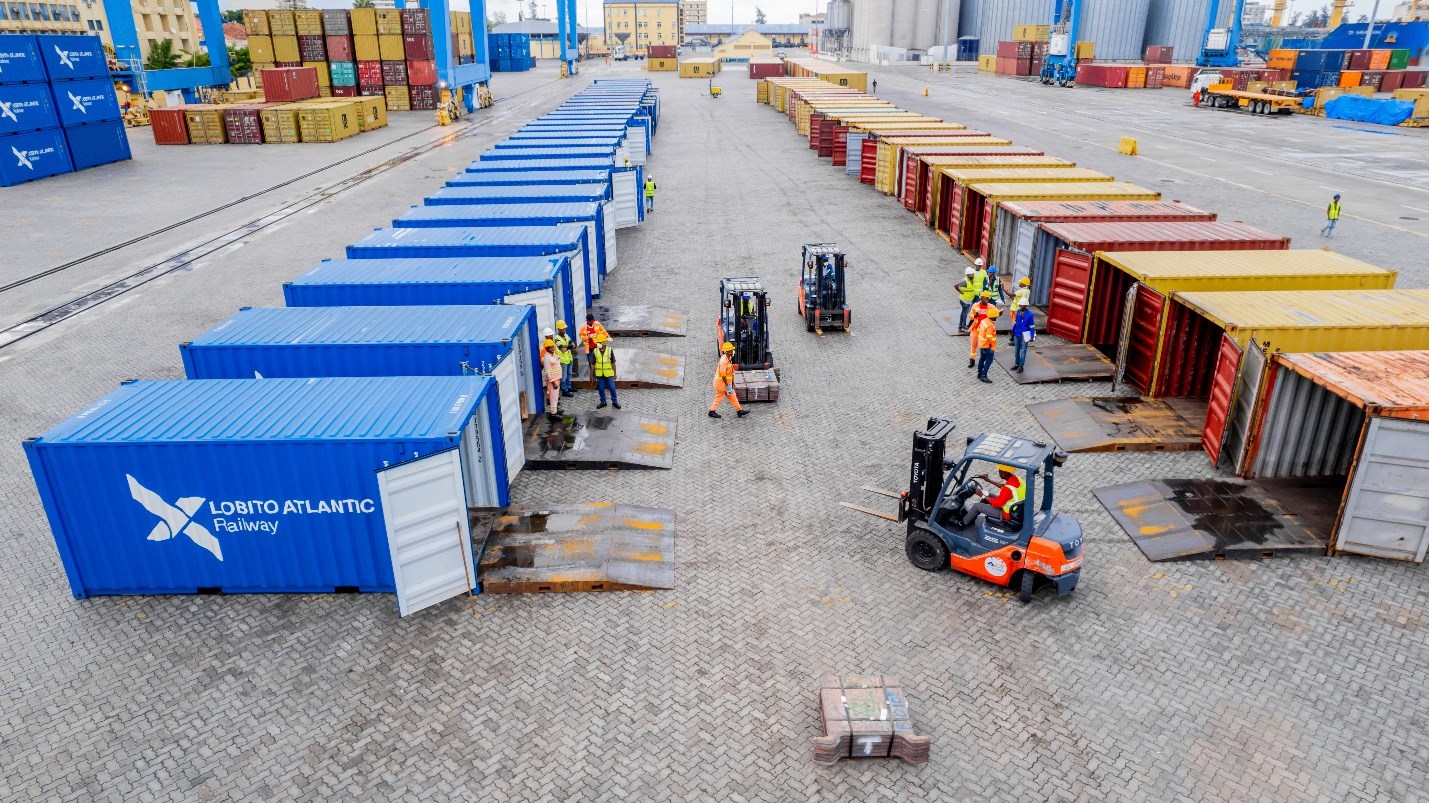
The first batch of 99.7%-pure copper anodes from Kamoa-Kakula’s 500,000-tonne-per-annum direct-to-blister copper smelter arrived at the Port of Lobito, following just a one-week journey via the Lobito Railway Corridor. The anodes are set to arrive in Europe for refining in May.
To view an enhanced version of this graphic, please visit:
https://images.newsfilecorp.com/files/3396/292158_83990bd494c319e1_002full.jpg
Summary of quarterly production data from Kamoa-Kakula
| Q1 2025 | Q2 2025 | Q3 2025 | Q4 2025 | Q1 2026 | |||||||
| Phase 1 & 2 (Kakula) | |||||||||||
| Ore tonnes milled (000’s tonnes) | 2,211 | 1,991 | 1,838 | 1,712 | 1,534 | ||||||
| Feed grade of ore processed (% copper) | 5.01% | 4.12% | 2.50% | 2.32% | 2.35% | ||||||
| Copper recovery (%) | 88.3% | 85.4% | 81.3% | 83.2% | 84.1% | ||||||
| Copper in concentrate produced (tonnes) | 97,575 | 71,401 | 37,744 | 34,602 | 30,527 | ||||||
| Phase 3 (Kamoa) | |||||||||||
| Ore tonnes milled (000’s tonnes) | 1,512 | 1,631 | 1,618 | 1,662 | 1,574 | ||||||
| Feed grade of ore processed (% copper) | 2.76% | 2.92% | 2.44% | 2.38% | 2.28% | ||||||
| Copper recovery (%) | 85.1% | 85.5% | 84.2% | 88.2% | 87.2% | ||||||
| Copper in concentrate produced (tonnes) | 35,545 | 40,608 | 33,522 | 34,814 | 31,379 | ||||||
| Combined Phase 1, 2, and 3 | |||||||||||
| Ore tonnes milled (000’s tonnes) | 3,723 | 3,622 | 3,456 | 3,374 | 3,108 | ||||||
| Feed grade of ore processed (% copper) | 4.10% | 3.58% | 2.47% | 2.35% | 2.32% | ||||||
| Copper recovery (%) | 87.4% | 85.4% | 82.7% | 85.7% | 85.6% | ||||||
| Copper in concentrate produced (tonnes) | 133,120 | 112,009 | 71,266 | 69,419 | 61,906 | ||||||
| Smelter* | |||||||||||
| Contained copper in blister or anode (000’s tonnes) | 71,417 | ||||||||||
| High-strength sulphuric acid (000’s tonnes) | 117,871 | ||||||||||
Data in bold denotes a quarterly record.
* includes production from Kamoa-Kakula’s on-site smelter, as well as Kamoa-Kakula concentrate toll-treated at the LCS smelter in Kolwezi
During the first quarter, the Phase 1, 2, and 3 concentrators milled 3.11 million tonnes of ore, producing 61,906 tonnes of copper in concentrate. Kamoa-Kakula’s copper smelter produced 63,671 tonnes of anode, and LCS produced 7,746 tonnes of copper in blister, for a total of 71,417 tonnes of copper in blister and anode produced by Kamoa-Kakula during the quarter. At quarter-end, there were approximately 40,000 tonnes of contained copper in inventory, down from approximately 50,000 tonnes of contained copper in inventory at the end of 2025. The inventory includes contained copper in concentrate, in the smelter circuit and in anode at Kamoa-Kakula, as well as contained copper in concentrate or blister at LCS.
For Q2 2026, the Kamoa mining area, which includes the Kamoa 1, Kansoko and Kahala underground mines, is expected to mine at a combined rate of 540,000 tonnes per month, equivalent to 6.5 million tonnes per annum (Mtpa) on an annualized basis, with a head grade of approximately 2.3% copper. There is sufficient ore from the Kamoa mines to fully utilize the Phase 3 concentrator.
In H2 2026, the mining rate from the Kamoa mines is expected to increase, ramping up to approximately 700,000 tonnes per month, or 8.5 Mtpa annualized, driven by an increased rate of development ore mined from the new Kahala box-cut. The increase in tonnes mined at Kamoa in the second half of 2026 will be processed by the Phase 1 and 2 concentrators.
The Phase 1 and 2 concentrators have completed the processing of nearly all remaining surface stockpiles. Ore feed into the Phase 1 and 2 concentrators in Q2 2026 will come from the western side of Kakula at a rate of approximately 400,000 tonnes per month, or 4.8 Mtpa annualized, at a grade of approximately 3% copper. Throughout the second quarter, the Phase 1 and 2 concentrators will be campaigned, or batch operated, due to reduced ore availability.
In H2 2026, the mining rate at Kakula is expected to increase to 500,000 tonnes per month, or 6.0 Mtpa annualized, at an average grade of approximately 3.5% copper.
The above production rates are factored into the 2026 guidance, which was revised on March 31, 2026, to between 290,000 and 330,000 tonnes of copper in anode or blister.
On-site, 500,000 tonnes-per-annum smelter ramp-up at 60%; Acid sales benefiting from global supply chain disruptions
The smelter is targeting production of approximately 850 tonnes per day of copper in anode, equivalent to an annualized rate of 300,000 tonnes of copper, which is approximately 60% of the design capacity. Further ramp-up of the smelter is constrained by concentrate feed. Management is currently evaluating the purchase and toll treatment of local third-party copper concentrates to further advance the smelter ramp-up and improve margins.
In addition to copper anodes, the smelter is also producing high-strength sulphuric acid at an average rate of 1,350 tonnes per day, equivalent to approximately 480,000 tonnes annualized, compared with the steady-state design capacity of 700,000 tonnes per annum. The first sales of acid from the smelter took place in early 2026 to nearby mining operations in the DRC Copperbelt. There are currently 6 offtakers that purchase acid at Kamoa-Kakula’s mine gate. The realized price for high-strength sulphuric acid is currently approximately $500 per tonne, with spot prices generally increasing over the quarter.
The first shipment of 99.7%-pure copper anodes produced by Kamoa-Kakula’s copper smelter, shipped along the Lobito Railway Corridor, arrived at the Atlantic port of Lobito during the quarter. The anodes are currently being shipped to Europe for refining and are expected to arrive in May. The transit time from the DRC Copperbelt to Lobito port via rail averages seven days, compared with more than three weeks when transported by truck to the ports of Durban or Dar es Saleem.
Launchpad for Kamoa-Kakula’s return to over 500,000 tonnes of copper is set as crews advance back toward the high-grade eastern section
As announced in the updated, independent technical report for the Kamoa-Kakula Copper Complex on March 31, 2026, Kamoa Copper will increase focus on development activities over the next 18-24 months, establishing long-term access development and mine services ahead of the active mining fronts, applying conservative near-term underground development advance rates.
Production guidance was announced to be 290,000 to 330,000 tonnes of copper anodes in 2026, and 380,000 to 420,000 tonnes of copper anodes in 2027. Management expects annualized copper anode production to exceed 500,000 tonnes from 2028 onwards.
Following recommendations from the Kamoa-Kakula MRE, Kamoa Copper has commenced work on an optimized Feasibility Study covering the next five years of operation. This will be accompanied by a Pre-Feasibility Study (PFS) on the remaining life-of-mine. The study is expected to be completed in approximately 12 months.
Development will be focused on establishing the peripheral access drives around the Kakula Mine, before stoping (production mining) of the newly developed mining areas begins. Production stoping is planned to start at Kamoa in H2 2026, whereas stoping at Kakula is not expected until H1 2027.
Dewatering of the Kakula Mine is currently over 70% complete, with underground water levels on the eastern side of the mine holding steady until additional Stage Three pumping infrastructure is installed, which is expected in Q2 2026. The dewatering of the Kakula Mine is off the critical mining path, and implementation does not impact the near-term mining schedule. Stage Two dewatering was completed in December 2025, as planned.
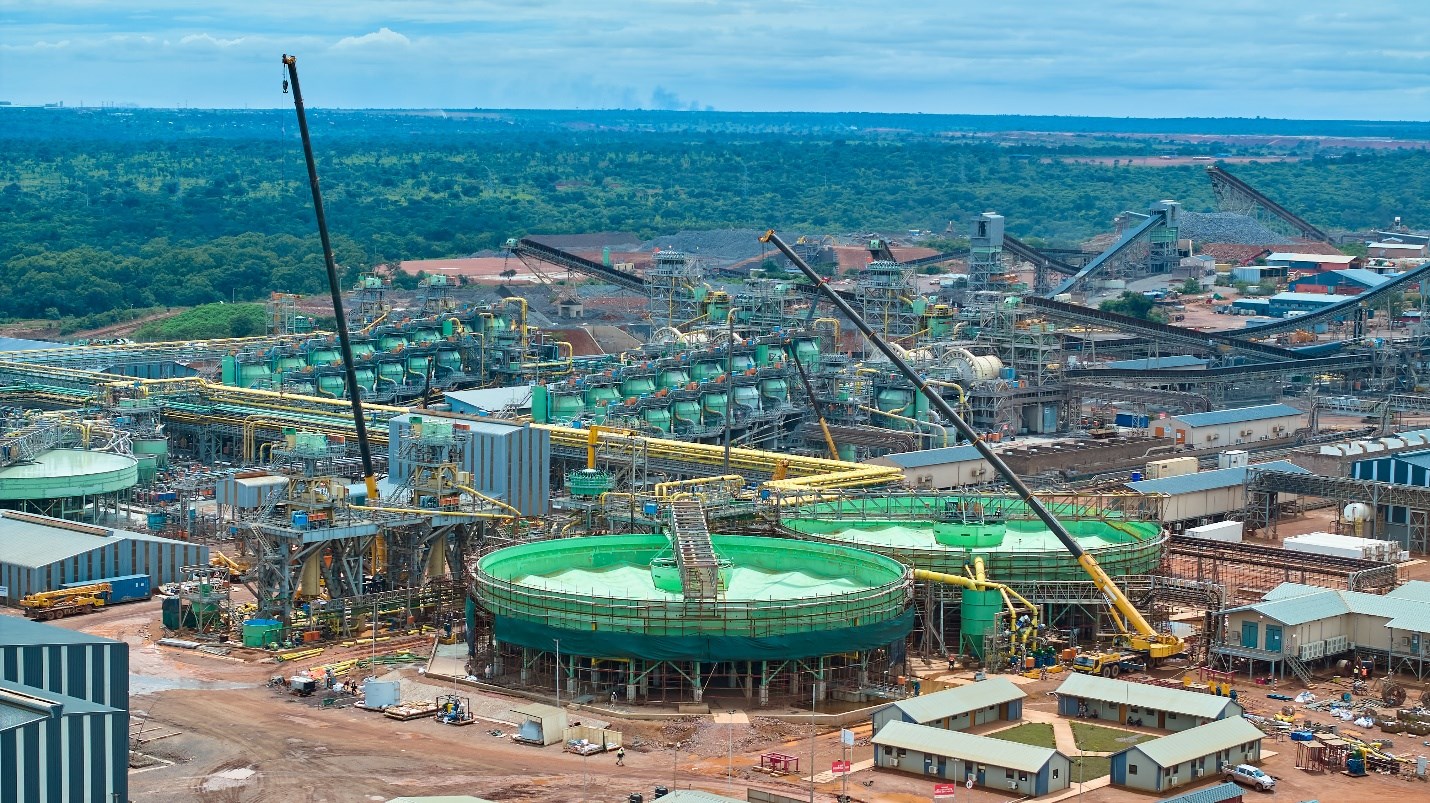
Aerial view over the Phase 1 and 2 concentrators, with Project 95 construction works in the foreground. Construction of Project 95 is nearing completion, with commissioning expected to commence in the coming weeks.
To view an enhanced version of this graphic, please visit:
https://images.newsfilecorp.com/files/3396/292158_83990bd494c319e1_003full.jpg
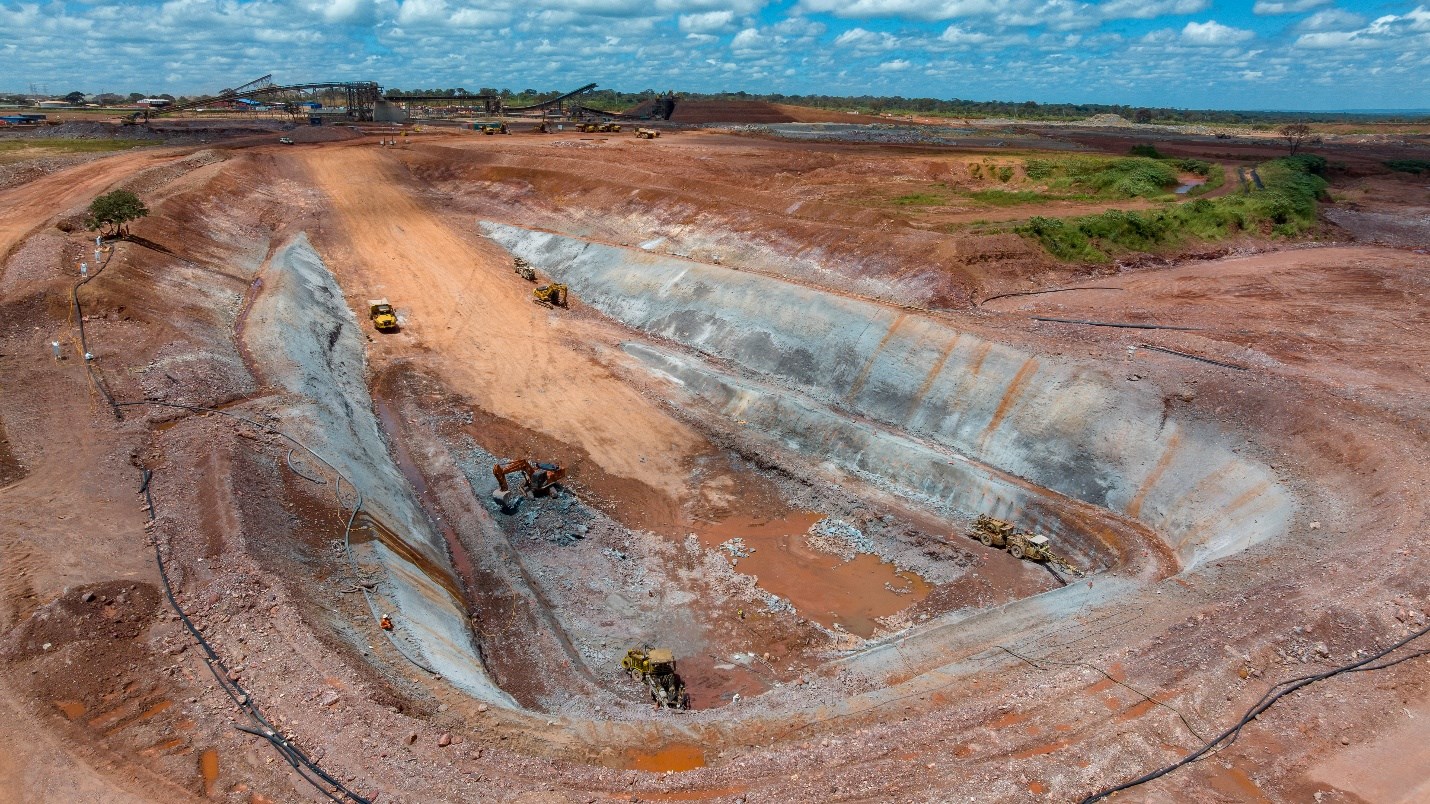
Aerial view over the construction site of the new Kahala Box Cut, located in the Kamoa Mines area. The combined mining rate from the Kamoa Mines area is expected to increase to an annualized rate of 8.5 Mtpa in Q4 2026, supported by development ore from Kahala from Q3 2026.
To view an enhanced version of this graphic, please visit:
https://images.newsfilecorp.com/files/3396/292158_83990bd494c319e1_004full.jpg
Kipushi concentrator produced a record 65,044 tonnes of zinc in Q1 2026, a quarter-on-quarter increase of 6%
Summary of quarterly production data from Kipushi
| Q1 2025 | Q2 2025 | Q3 2025 | Q4 2025 | Q1 2026 | |||||
| Kipushi Concentrator | |||||||||
| Ore tonnes milled (tonnes) | 151,403 | 153,342 | 168,862 | 194,140 | 196,774 | ||||
| Feed grade of ore milled (% zinc) | 32.16 | 33.37 | 37.81 | 36.18 | 36.96 | ||||
| Zinc recovery (%) | 87.93 | 85.22 | 89.36 | 87.71 | 90.63 | ||||
| Zinc in concentrate produced (tonnes) | 42,736 | 41,788 | 52,700 | 61,444 | 65,044 | ||||
Data in bold denotes a quarterly record.
A record 65,044 tonnes of zinc in concentrate were produced in Q1 2026, a 6% quarter-on-quarter improvement. The performance was boosted by a record 22,968 tonnes of zinc produced in January.
Despite the quarterly record production, the availability of the Kipushi concentrator was still impacted by electrical grid instability. In addition to increasing the on-site back-up generator capacity in Q4 2025 by 20% to 20 megawatts, upgrades to Kipushi’s 120kV electrical intake substation were recently completed and commissioned. The main benefit of the upgrade is to better respond to and safely control grid instability experienced by the Kipushi operations. The upgrades will thereby improve the availability and protect the operations of the major infrastructure, such as the concentrator and shaft.
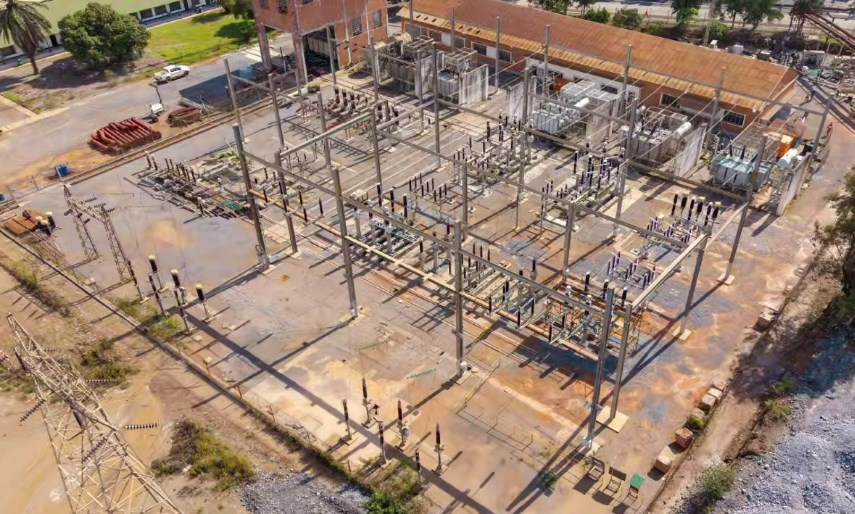
Aerial view of the upgraded 120kV main intake substation, which was commissioned in Q1 2026
To view an enhanced version of this graphic, please visit:
https://images.newsfilecorp.com/files/3396/292158_83990bd494c319e1_005full.jpg
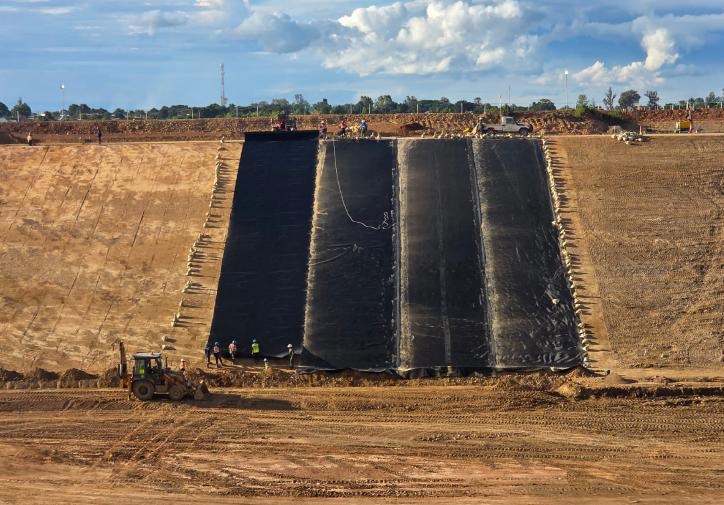
Lining of the Kipushi Mine’s new tailings storage facility (TSF) paddock 2B extension has commenced. Construction is 70% complete with the first deposit of tailings expected from October 2026. The new TSF, along with the existing TSF, have been designed to be compliant with Global Industry Standard on Tailings Management (GISTM).
To view an enhanced version of this graphic, please visit:
https://images.newsfilecorp.com/files/3396/292158_83990bd494c319e1_006full.jpg
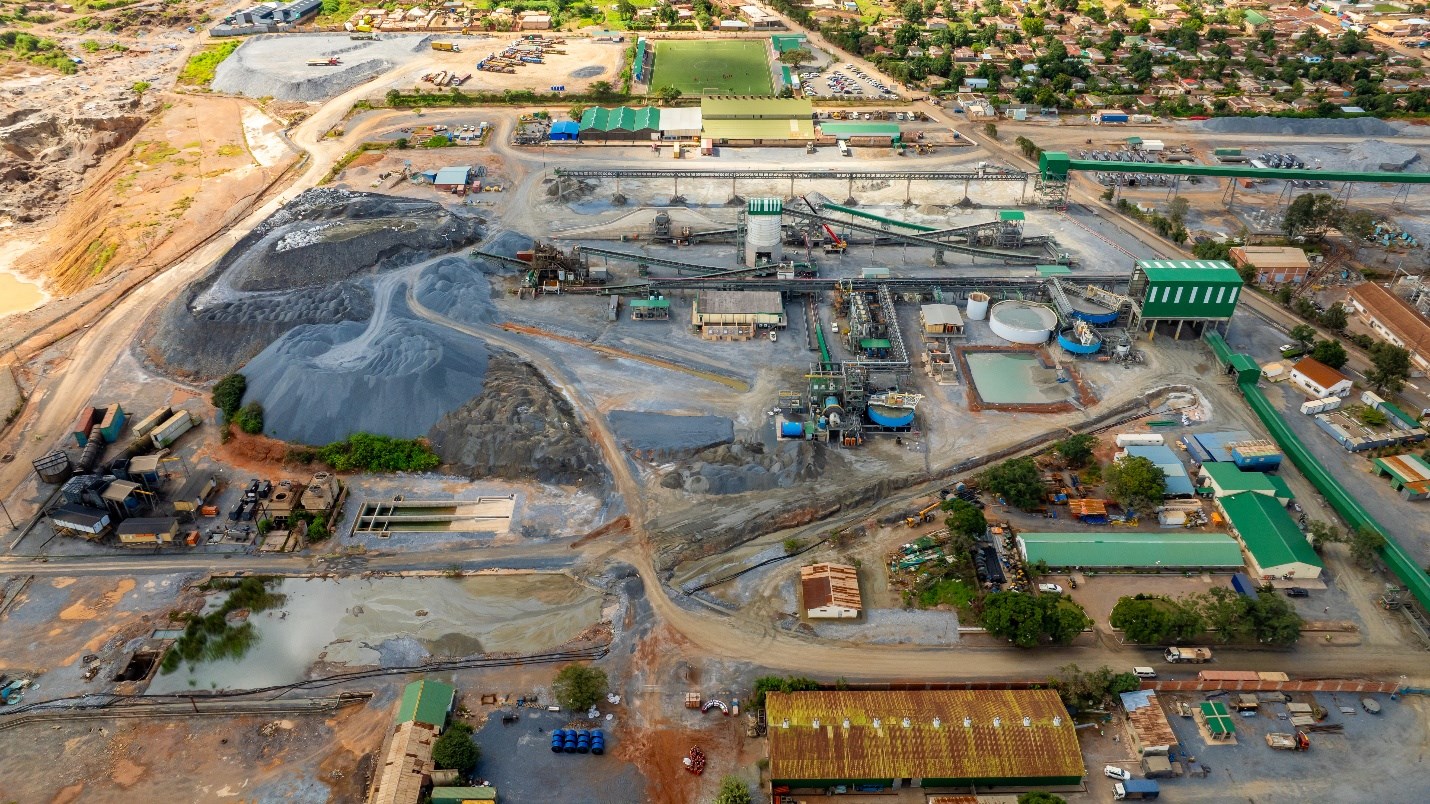
Aerial view over the Kipushi concentrator site, which produced a record 65,044 tonnes of zinc in concentrate in Q1 2026, a 6% quarterly increase.
To view an enhanced version of this graphic, please visit:
https://images.newsfilecorp.com/files/3396/292158_83990bd494c319e1_007full.jpg
Ramp-up of Platreef Mine’s Phase 1 concentrator is advancing, with commercial production expected mid-year, following recent completion of Shaft #3
Summary of quarterly production data from Platreef Phase 1 commissioning
| Q4 2025 |
Q1 2026 | |
| Platreef Phase 1 Concentrator | ||
| Ore tonnes milled (DMT) | 25,543 | 27,512 |
| Feed grade ore milled (g/t) | 2.64 | 2.78 |
| Recovery (%) | 45 | 57 |
| PGM production (3PE + Au ounces) | 965 | 1,428 |
Production from the 0.8-Mtpa Phase 1 concentrator started on November 18, 2025. Since first production, total of approximately 2,400 ounces of platinum, palladium, rhodium and gold have been produced.
Platreef Mine’s Phase 1 concentrator was campaigned during the quarter with lower-grade development ore, so production results are not representative of steady-state. The recent completion of Shaft #3 increases hoisting capacity by approximately five times, enabling the concurrent hoisting of ore and development waste, which was previously not possible with Shaft #1 alone. Once Shaft #3 is ramped up within the coming weeks, the Phase 1 concentrator will be continuously fed with higher-grade ore from stoping (production mining). Other than a small number of test blasts, stoping has not yet started. Stoping on the 850-metre level is expected to start imminently. The Phase 1 concentrator is expected to steadily ramp up commercial production from mid-year.
Construction of Shaft #3, along with its associated underground materials-handling and crushing plants, was completed on schedule in late March and is currently undergoing commissioning. In addition, on April 1, 2026, the winder license was approved by the regulator, authorizing the shaft’s commercial use. Shaft #3 will also hoist the waste development required in preparation for the Phase 2 expansion, which is on schedule to be completed by the end of 2027. Early works on the Phase 2 expansion’s surface infrastructure also started during the first quarter. The breaking of ground on the 3.3-million-tonne-per-annum Phase 2 concentrator site took place ahead of schedule on April 9, 2026.
Shaft #2’s slipe and line contract was awarded to United Mining Services (UMS) of Johannesburg, South Africa, in Q1 2026. The slipe and line method is a mining technique used to widen vertical shafts, while simultaneously installing a permanent lining to support the shaft walls. Using this method, Shaft #2 will be widened from its current diameter of 3.1 metres to 10 metres. Site mobilization was completed by UMS during the first quarter, with the first ‘slipe’ blast of Shaft #2 taking place on schedule on April 1, 2026. Shaft #2 is expected to be ready to hoist labour and materials by the end of 2028 and ready to hoist ore by the end of 2029, supporting both the steady-state operations of Phase 2, as well as the future Phase 3 expansion.
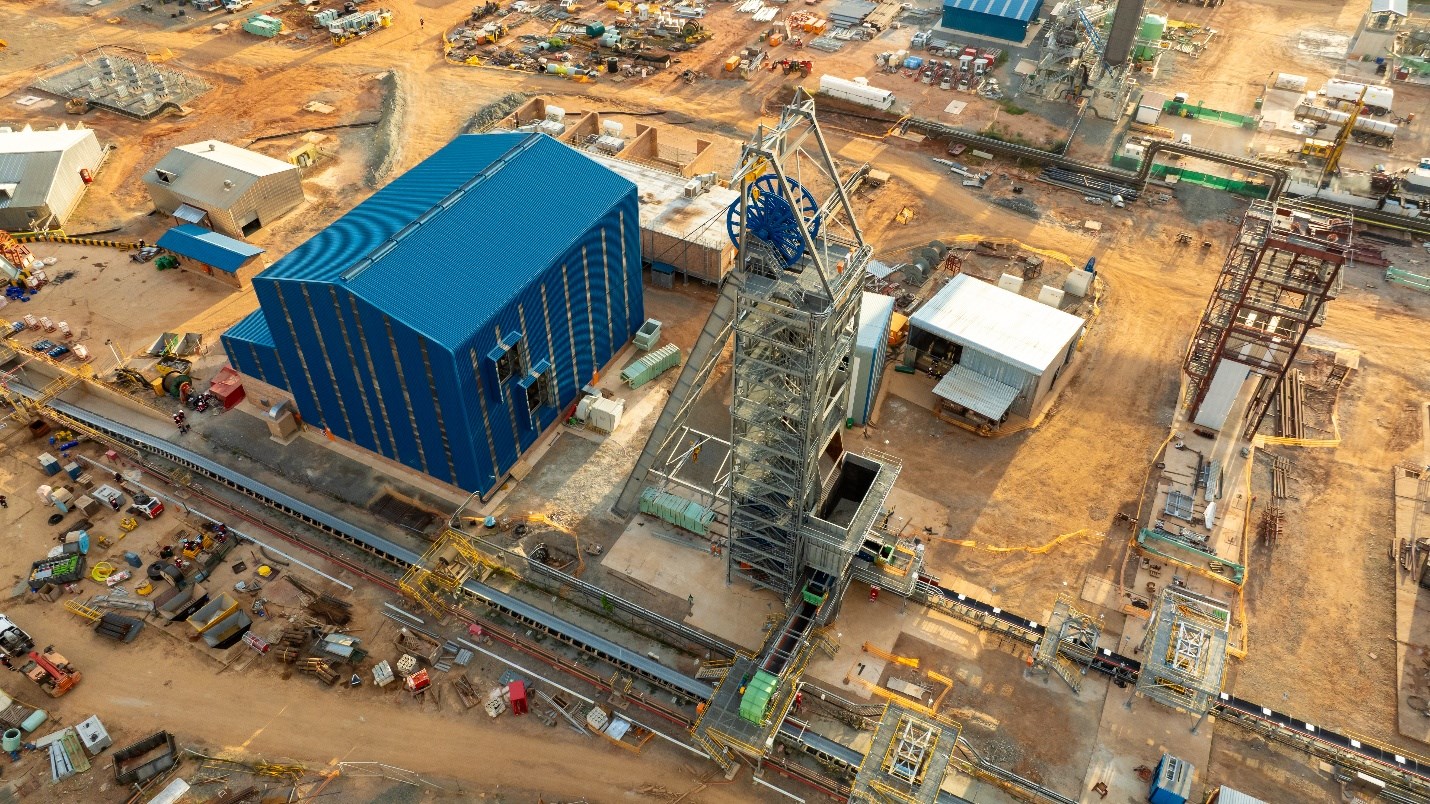
Aerial view of the Platreef Mine’s recently completed 4-Mtpa Shaft #3. The shaft will be used to hoist ore for both the current Phase 1 concentrator and the future Phase 2 concentrator from Q4 2027.
To view an enhanced version of this graphic, please visit:
https://images.newsfilecorp.com/files/3396/292158_83990bd494c319e1_008full.jpg
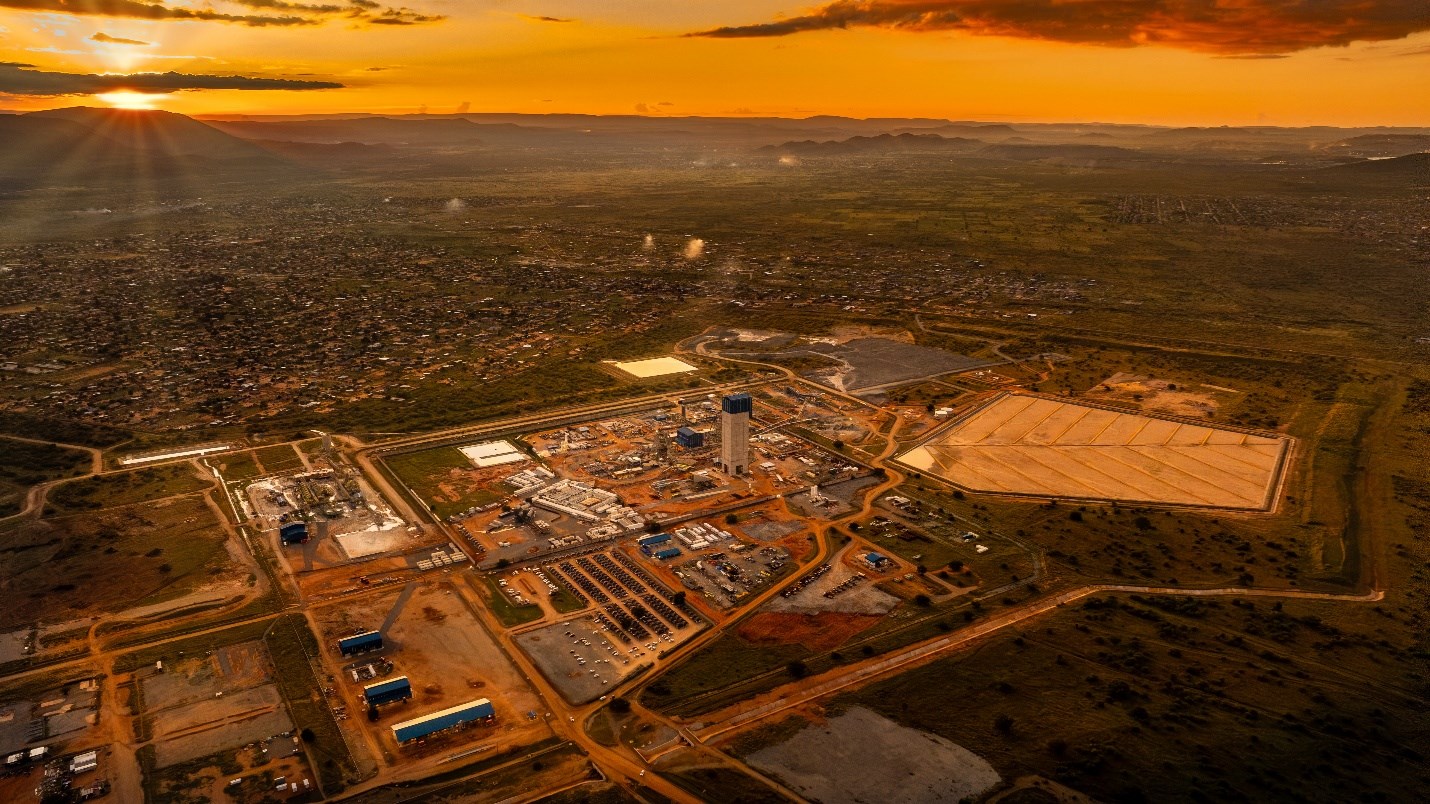
Aerial view of the Platreef Mine’s surface infrastructure, with the headframes of Shafts #1, #2 and #3 (centre), the Phase 1 concentrator (left) and the dry stack tailings facility (right).
To view an enhanced version of this graphic, please visit:
https://images.newsfilecorp.com/files/3396/292158_83990bd494c319e1_009full.jpg
Ivanhoe Mines to issue Q1 2026 financial results after market close on May 6, and host conference call for investors on May 7, 2026
Ivanhoe Mines will report its Q1 2026 financial results and a detailed update on its operations after market close on Wednesday, May 6, 2026.
The company plans to hold an investor conference call to discuss the first quarter financial results the following day on Thursday, May 7, 2026. Details of the call will be shared closer to the date.
An audio webcast recording of the conference call, together with supporting presentation slides, will be available on Ivanhoe Mines’ website at www.ivanhoemines.com.
After issuance, the Financial Statements and Management’s Discussion and Analysis will be available at www.ivanhoemines.com and www.sedarplus.ca.
Qualified Persons
The scientific and technical information contained in this disclosure has been reviewed and approved by Steve Amos, BSc (Hons), MSc (Eng), FSAIMM (703500) and Simon Bottoms, MGeol, CGeol (1023769), FAusIMM (313276) who are each considered, by virtue of their education, experience and current good standing professional accreditation, as a “Qualified Person” as defined in National Instrument 43-101 – Standards of Disclosure for Mineral Projects (NI 43-101).
Mr. Amos & Mr. Bottoms are not considered independent under NI 43-101 as Mr. Amos is the Executive Vice President, Projects, at Ivanhoe Mines and Mr. Bottoms is the Executive Vice President, Technical Services. Mr. Amos and Mr. Bottoms have verified all such technical data within this disclosure.
All mineral reserve and mineral resource estimates are estimated in accordance with NI 43-101. Unless otherwise noted, such mineral reserve and mineral resource estimates are as of December 31, 2025.
Other exploration or mineral resource related disclosures of a scientific or technical nature not supported by any Technical Reports, including the Western Forelands Exploration Project, have been reviewed and approved by Tim Williams, who is considered, by virtue of his education, experience and current good standing professional accreditation, a Qualified Person under NI 43-101. Mr. Williams is not considered independent under NI 43-101 as he is the Vice President, Geosciences.
Ivanhoe has prepared independent, NI 43-101-compliant technical reports for the Kamoa-Kakula Copper Complex, the Platreef Mine, and the Kipushi Mine, each of which is available on the company’s website and under the company’s SEDAR+ profile at www.sedarplus.ca
- The Kamoa-Kakula Mineral Reserve and Mineral Resource Technical Report, dated March 31, 2026, was prepared by AMC Mining Consultants South Africa (Pty) Ltd and MSA Group (Pty) Ltd.
- The Kipushi 2022 Feasibility Study, dated February 14, 2022, prepared by OreWin Pty Ltd., MSA Group (Pty) Ltd., SRK Consulting (South Africa) (Pty) Ltd, and METC Engineering.
- The Platreef Integrated Development Plan 2025, dated February 15, 2025, prepared by OreWin Pty Ltd., Mine Technical Services, SRK Consulting Inc., DRA Projects (Pty) Ltd, and Golder Associates Africa.
The technical reports include relevant information regarding the assumptions, parameters, and methods of the Mineral Resource and Mineral Reserve estimates on the Kamoa-Kakula Copper Complex, the Kipushi Mine and the Platreef Mine cited in this news release, as well as information regarding data verification, exploration procedures and other matters relevant to the scientific and technical disclosure contained in this news release.
About Ivanhoe Mines
Ivanhoe Mines is a Canadian mining company focused on advancing its three principal projects in Southern Africa: the expansion of the Kamoa-Kakula Copper Complex in the DRC, the ramp-up of the ultra-high-grade Kipushi zinc-copper-germanium-silver mine, also in the DRC; and the phased development of the tier-one Platreef platinum-palladium-nickel-gold-rhodium-copper mine in South Africa.
Ivanhoe Mines is also exploring its highly prospective, 54-100% owned exploration licences in the Western Forelands, covering an area over five times larger than the adjacent Kamoa-Kakula Copper Complex. Ivanhoe is exploring for new sedimentary copper discoveries, as well as expanding and further defining its high-grade Makoko, Kiala, and Kitoko copper discoveries as the company’s next major development projects.
Follow Robert Friedland (@robert_ivanhoe) and Ivanhoe Mines (@IvanhoeMines_) on X.
Information contact
Investors
Tommy Horton +44 7866 913 207 (London)
Eric Zurmuehle +1 203 451 5834 (New York)
Media
Tanya Todd +1.604.331.9834 (Vancouver)
Forward-looking statements
Certain statements in this release constitute “forward-looking statements” or “forward-looking information” within the meaning of applicable securities laws. Such statements and information involve known and unknown risks, uncertainties, and other factors that may cause the actual results, performance, or achievements of the company, its projects, or industry results, to be materially different from any future results, performance, or achievements expressed or implied by such forward-looking statements or information. Such statements can be identified using words such as “may”, “would”, “could”, “will”, “intend”, “expect”, “believe”, “plan”, “anticipate”, “estimate”, “scheduled”, “forecast”, “predict” and other similar terminology, or state that certain actions, events, or results “may”, “could”, “would”, “might” or “will” be taken, occur or be achieved. These statements reflect the company’s current expectations regarding future events, performance, and results and speak only as of the date of this release.
Such statements include, without limitation: (i) statements that commercial production at Platreef expect to occur in 2027; (ii) statements that Shaft #3 will increase the Platreef Mine’s hoisting capacity by approximately five times enabling the concurrent hoisting of ore and development waste; (iii) statements that for Q2 2026, the Kamoa Mine area, which consists of Kamoa 1, Kansoko and Kahala underground mines, are expected to mine at a combined rate of 540,000 tonnes per month, equivalent to 6.5 Mtpa on an annualized basis, with a head grade of approximately 2.3% copper; (iv) statements that from June 2026, the mining rate from the Kamoa Mine is expected to increase, ramping up to approximately 670,000 tonnes per month by the end of third quarter; (v) statements that ore feed into the Phase 1 and 2 concentrators in the second quarter will come exclusively from the western side of the Kakula Mine; (vi) statements that Management expects annualized copper anode production to achieve over 500,000 tonnes from 2028; (vii) statements that production stoping is planned to start at Kamoa in H2 2026 and at Kakula in H1 2027; (viii) statements that additional Stage Three pumping infrastructure is expected to be installed in Q2 2026; (ix) statements that first deposit of tailings into the new TSF at Kipushi is expected in October 2026; (x) statements that shaft #2 is expected to be ready to hoist labour and materials by the end of 2028 and ready to hoist ore by the end of 2029, supporting both the steady-state operations of Phase 2, as well as prepare for the Phase 3 expansion; (xi) statements that the smelter is targeting production of approximately 850 tonnes per day of copper in anode, equivalent to an annualized rate of 300,000 tonnes of copper; and, (xii) statements that ore feed into the Phase 1 and 2 concentrators in Q2 2026 will come from the western side of Kakula at a rate of approximately 400,000 tonnes per month, or 4.8 Mtpa annualized, at a grade of approximately 3% copper, increasing to 500,000 tonnes per month in H2 2026 at a grade of 3.5% copper.
Forward-looking statements and information involve significant risks and uncertainties, should not be read as guarantees of future performance or results, and will not necessarily be accurate indicators of whether such results will be achieved. Many factors could cause actual results to differ materially from the results discussed in the forward-looking statements or information, including, but not limited to: (i) uncertainty around the rate of water ingress into underground workings at Kakula; (ii) the ability, and speed with which, additional equipment can be secured for Stage Two of the Kakula dewatering; (iii) the continuation of seismic activity at Kakula; (iv) the state of underground infrastructure at Kakula; (v) uncertainty around when future underground access can be secured at Kakula; (vi) the fact that future mine stability at Kakula cannot be guaranteed; (vii) the fact that future mining methods may differ and impact on Kakula operations; and (viii) the ultimate conclusion of the assessment of the cause of the seismic activity at Kakula and the impact of same on the mining plan at the Kamoa Kakula Copper Complex. Additional factors also include those discussed above and under the “Risk Factors” section in the company’s MD&A for the financial year ended December 31, 2025, and its current annual information form, and elsewhere in this news release, as well as unexpected changes in laws, rules or regulations, or their enforcement by applicable authorities; changes in the rate of water ingress into underground workings; the continuation of seismic activity; the state of underground infrastructure; delays in securing underground access; changes to the mining methods required in the future; the failure of parties to contracts with the company to perform as agreed; social or labour unrest; changes in commodity prices; and the failure of exploration programs or studies to deliver anticipated results or results that would justify and support continued exploration, studies, development or operations.
Although the forward-looking statements contained in this news release are based upon what management of the company believes are reasonable assumptions, the company cannot assure investors that actual results will be consistent with these forward-looking statements. These forward-looking statements are made as of the date of this news release and are expressly qualified in their entirety by this cautionary statement. Subject to applicable securities laws, the company does not assume any obligation to update or revise the forward-looking statements contained herein to reflect events or circumstances occurring after the date of this news release.
The company’s actual results could differ materially from those anticipated in these forward-looking statements as a result of the factors outlined in the “Risk Factors” section in the company’s MD&A for the financial year ended December 31, 2025, and its current annual information form.